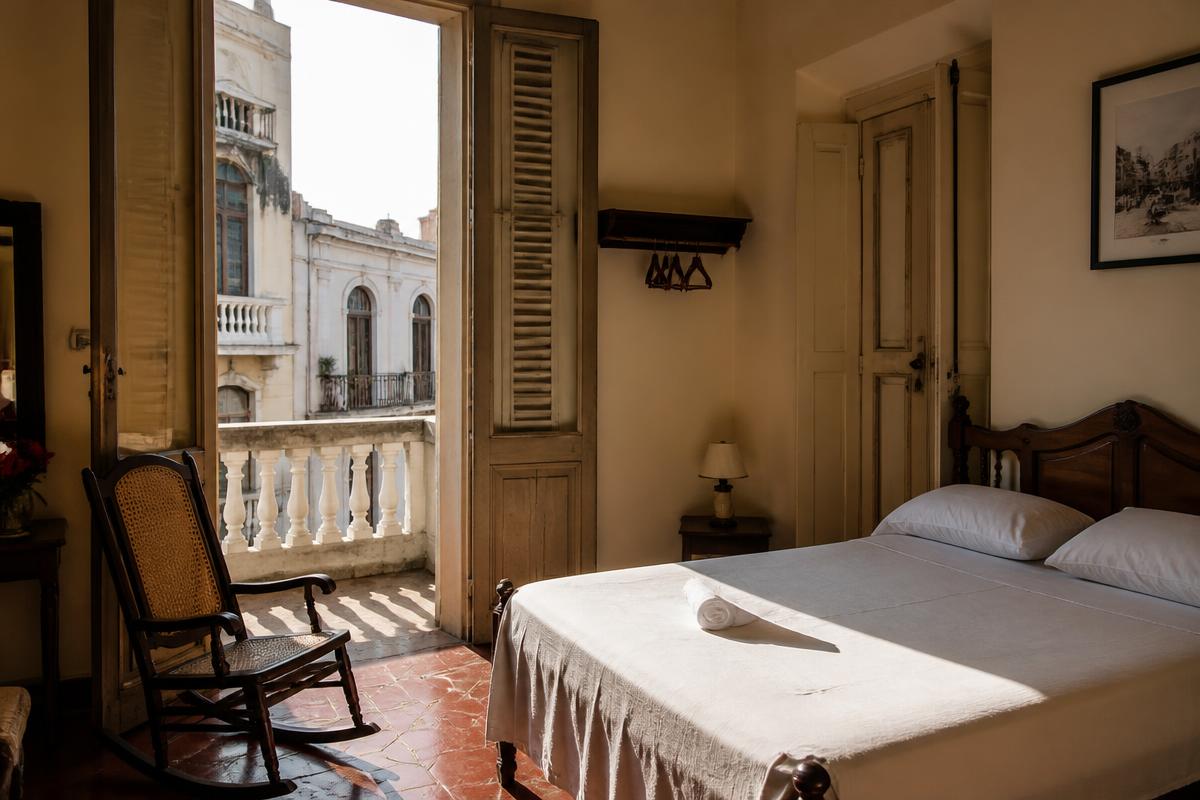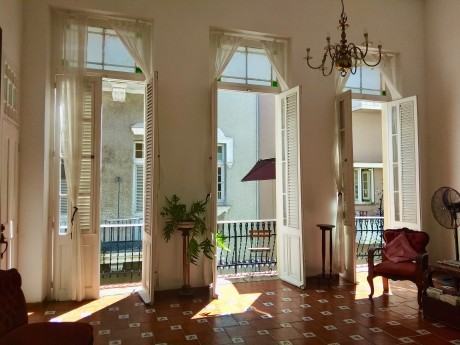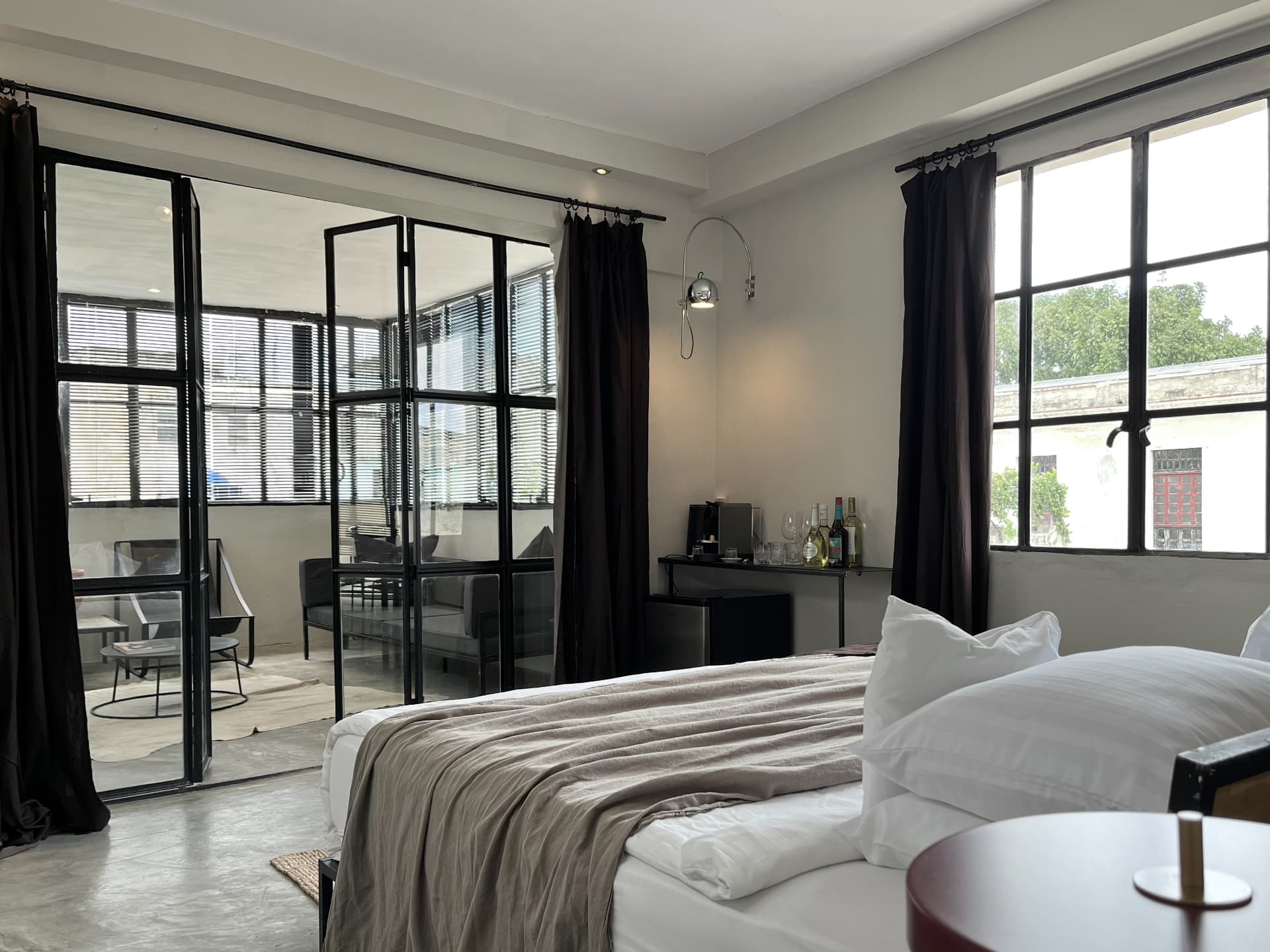
Cuban reservations follow their own rules. Here is the sequence that works, from route planning to the confirmation you save offline.
Why Cuba is different
In most countries you open a booking site, compare a hundred properties in one city, filter by price and book in four minutes. Cuba does not work that way. Accommodation for visitors is overwhelmingly a private-sector business: individual families licensed to rent rooms or whole homes, most of them managing a single property and a phone line rather than a chain of listings.
That changes the mechanics of booking in three ways: availability is confirmed person to person rather than by an instant calendar, communication can take a day rather than a minute, and the details you need on arrival — the cross street, the floor, the host's number — matter far more than the star rating. None of that is difficult. It simply rewards planning in a particular order.
Plan the route before the rooms
Most Cuban itineraries are built city by city: a few nights in Havana, two or three in Viñales, another stretch in Trinidad. Because stays are booked individually rather than as a package, deciding your nights per destination first saves you from cancelling and rebooking later.
Allow travel time between towns. Road journeys often take longer than the map suggests, and arriving after dark in an unfamiliar neighborhood is the part travelers most regret. As a rough planning rule, treat any intercity leg as half a day: you lose the morning to the road and the afternoon to settling in.
Resist the urge to add a fifth or sixth stop. Three or four bases across ten nights gives you time to actually see each place, and it means three or four bookings to manage instead of six — which, in a country where each booking is its own conversation, is a real saving of effort.
Use a platform that actually operates in Cuba
Several of the largest international booking sites do not process Cuban reservations at all, and others list properties they cannot confirm. Book through a provider that communicates directly with hosts and issues a real confirmation.
Before you pay, check three things: that the listing names an actual address rather than a neighborhood, that the confirmation includes a phone number you can call locally, and that the cancellation terms are written somewhere you can retrieve without internet. A platform that cannot supply all three is guessing on your behalf.
How far ahead to book
In the busy months from December through March, and again in July and August, the well-reviewed private homes in Havana, Viñales and Trinidad fill weeks ahead. Book those first nights early — especially your arrival night, which is the one you cannot improvise.
Outside those periods you have more slack, and there is a case for leaving the last leg of a longer trip flexible. Hosts are extremely well connected to one another; a good host in Viñales can usually find you a room in Cienfuegos with one phone call, often at a house they personally vouch for.
Confirm the details that matter on arrival
Once a stay is confirmed, send the host a short message covering four points: your arrival time, how you are travelling in, how many guests, and whether you would like breakfast. Those four answers prevent almost every awkward first hour.
Ask explicitly what happens if your arrival slips. Flights and long-distance road transport in Cuba are not precision instruments, and a host who knows you may be three hours late will simply wait up rather than assume you are not coming.
Save everything offline
Screenshot your confirmation, the host's phone number and the full address, including cross streets. Internet access is improving but still intermittent, and your taxi driver will ask for the address before you can load an email.
Print one paper copy of the whole itinerary — every address, every phone number, every date — and keep it separately from your phone. It costs nothing, survives a dead battery, and can be handed straight to a driver who does not read English.
Download an offline map of each city you will visit before you leave home. Being able to point at where you are and where you are going resolves in ten seconds what otherwise becomes a twenty-minute negotiation.
A note for US travelers
US regulations require travelers to qualify under an authorized category and to avoid properties on the US government's restricted list. Staying in privately owned casas particulares and independent guesthouses keeps your lodging spend with Cuban families, which is exactly the direction the rules point. Keep your booking records: you are expected to retain them for five years.
Building the paper trail as you go
Treat recordkeeping as part of the booking process rather than something to reconstruct afterwards. Each time a stay is confirmed, save the receipt, the property name and address, the nightly rate and the dates into a single folder — one per trip. A five-year retention expectation is far easier to meet when the file was assembled in real time.
Add a short daily note describing what you did and with whom. Travelers under an authorized category are expected to keep a full-time schedule of qualifying activities, and a few lines a day — the family workshop you visited, the private paladar where you ate, the independent guide you hired — is the simplest form that record can take.
Keep the record with the booking file, not scattered across a phone. A single folder containing confirmations, receipts and a day-by-day summary is a complete answer to any later question about the trip.
Checking a property before you commit
Before paying anything, confirm two things about the property: that it is privately owned and operated by the family or individual you are dealing with, and that it does not appear on the US government's Cuba Restricted List. Both checks take minutes and both are far cheaper to do before a deposit than after.
Ask the host directly who owns the building and who receives the payment. An independent operator answers that question immediately and without hedging. If the answer is vague, treat the vagueness itself as the signal and move on — there is no shortage of well-run private homes.
The restricted list is updated periodically, so check it close to your departure date rather than relying on a check you did months earlier when you first started planning.
Booking happens on our partner's site — we never take payments here.
Book Now