Licensing, recent reviews and a precise address tell you more than photos ever will. What to check before you commit.
Why photos are the weakest evidence
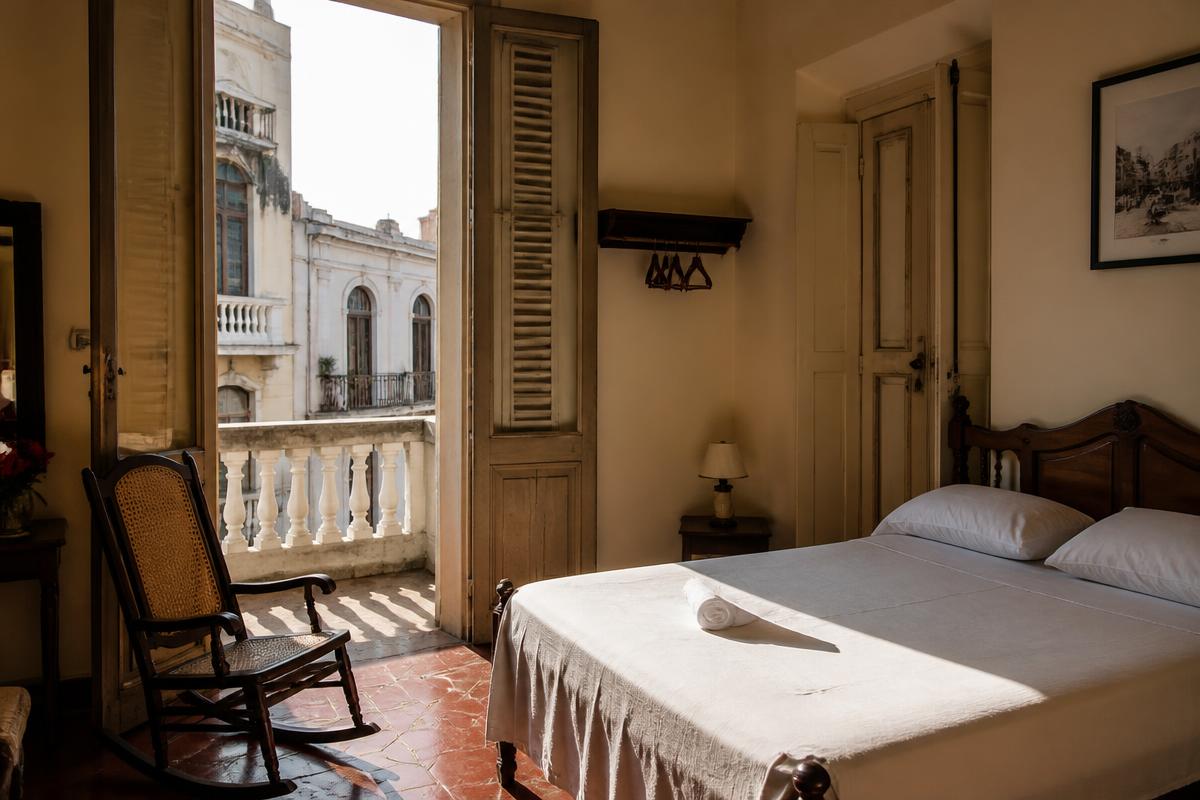
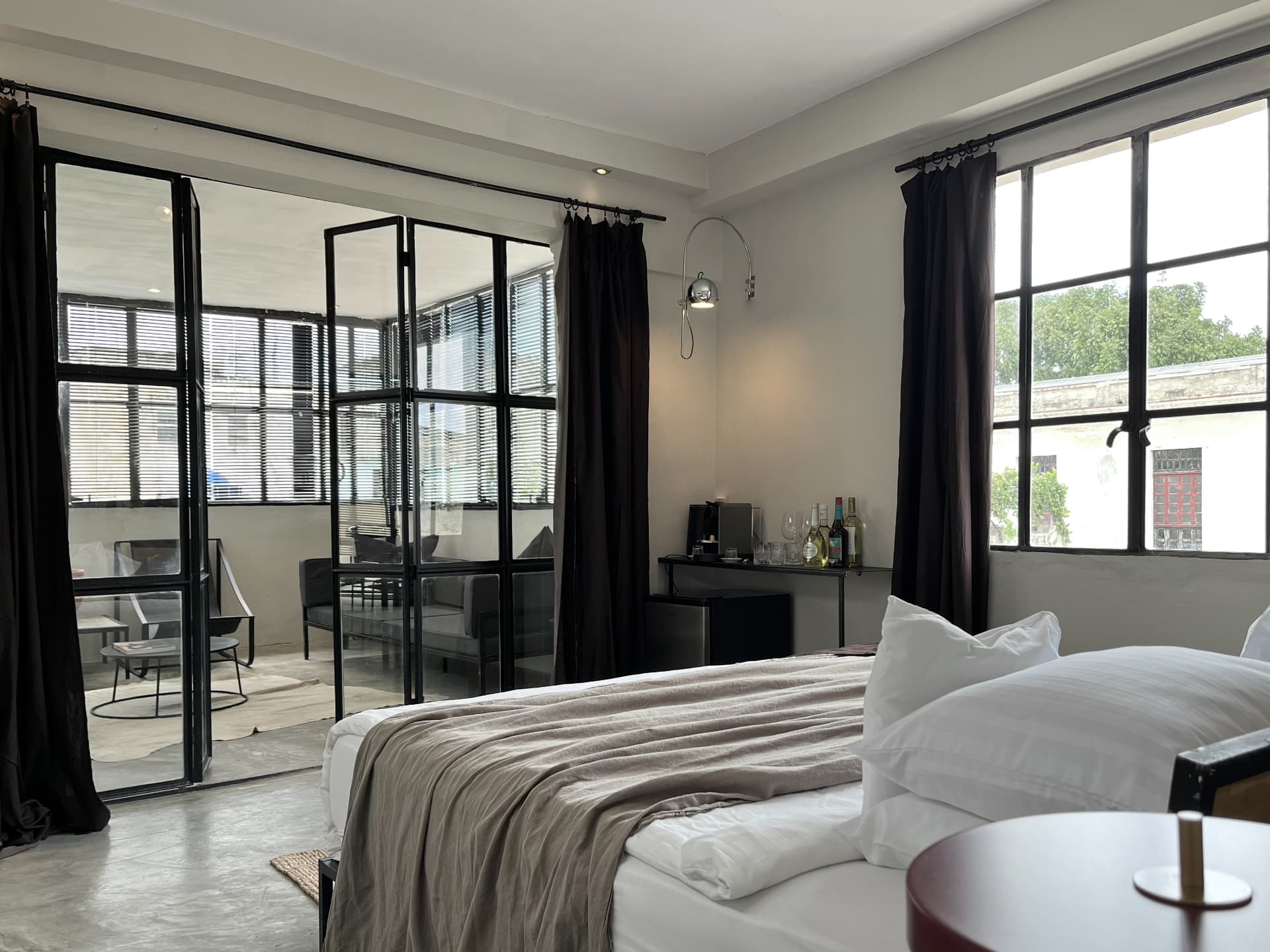
Listing photos in Cuba are often several years old, shot in the best light of the best corner of the house, and occasionally not of that house at all. They tell you almost nothing about whether the water runs hot, whether the street is safe at midnight, or whether the host will answer the phone when your flight lands late.
The five signals below are all things a good host can produce in a sentence and a bad one cannot produce at all. Check them in order and you will filter out most problems before you send any money.
1. The blue sign
Licensed rentals display a blue anchor-shaped sign on the door. It means the property is registered and licensed to host, and guests are formally documented — a meaningful baseline of accountability.
It also matters for US travelers specifically: a licensed private home is a family business, which is precisely the kind of Cuban private enterprise your lodging spend is supposed to support. If a listing cannot confirm it is a licensed private residence, keep looking.
2. Reviews from this year
Sort by most recent rather than highest rated. Ownership, renovations and neighborhood conditions change quickly, and a five-star review from several years ago describes a property that may no longer exist in that form.
Read the three-star reviews first. They are the honest ones: they say what was good and what was not, and they usually tell you whether the problem is fixable — a noisy street you can sleep through — or structural, like a host who is impossible to reach.
3. A specific, verifiable address
A trustworthy listing gives the street, number, floor, apartment and cross streets. Vagueness at booking stage becomes a problem at eleven at night with luggage.
Cuban addresses are conventionally written with the cross streets — for example, a number on Calle 21 between calles E and F. Ask for that form specifically. Drop the address into an offline map before you travel and check it lands where the listing claims.
4. Clear answers about utilities
Ask directly about hot water, air conditioning and what happens during a power cut. Hosts who answer plainly, including about limitations, are the ones who will handle problems well.
Add two more questions while you are there: is there a fan and a mosquito screen, and is there a working way to reach you on arrival day. A host who says "the water is hot from six to ten, and we have a tank besides" is far more reassuring than one who simply says everything is perfect.
5. Arrive already booked
Be wary of anyone offering rooms at the airport or bus terminal. The safest arrival is one where the address is already in your pocket and the host is expecting you.
The same applies to the friendly stranger who tells you, on the way to your casa, that the house has closed or is full and offers an alternative. It is a long-standing commission scheme. Call your host and confirm before you agree to be taken anywhere else.
What good looks like once you are inside
A reputable host registers your passport details on arrival, shows you how the door and the water work, gives you a number to call, and tells you plainly which streets to use late at night. If you get all four in the first ten minutes, you booked well — and that host is usually the best source for your next town.
6. The property is unmistakably private
Ask who owns the house and who receives your payment. A genuine independent host answers in one sentence, usually with a family history attached. Anything that sounds like a management company, a chain, or an arrangement the host cannot describe is a reason to keep looking.
For US travelers this is not only a quality signal. Lodging must avoid properties on the US government's Cuba Restricted List, and a clearly family-owned casa is the simplest way to stay well clear of it. Check the list close to your departure date, since it is revised periodically.
Red flags worth walking away from
Pressure to wire a large deposit to an unfamiliar third party, refusal to give a full address before payment, and listings whose photos appear on several different properties are the three most common patterns behind bad bookings. Any one of them is enough to stop.
A host who becomes evasive when asked about ownership, licensing or water and power is telling you something useful. Politely end the conversation and book elsewhere; the supply of well-run private homes is genuinely large.
Booking happens on our partner's site — we never take payments here.
Book Now