Both are private, family-owned stays, but they deliver very different trips. A clear-eyed comparison of cost, comfort, and what you actually experience.
The two options, briefly
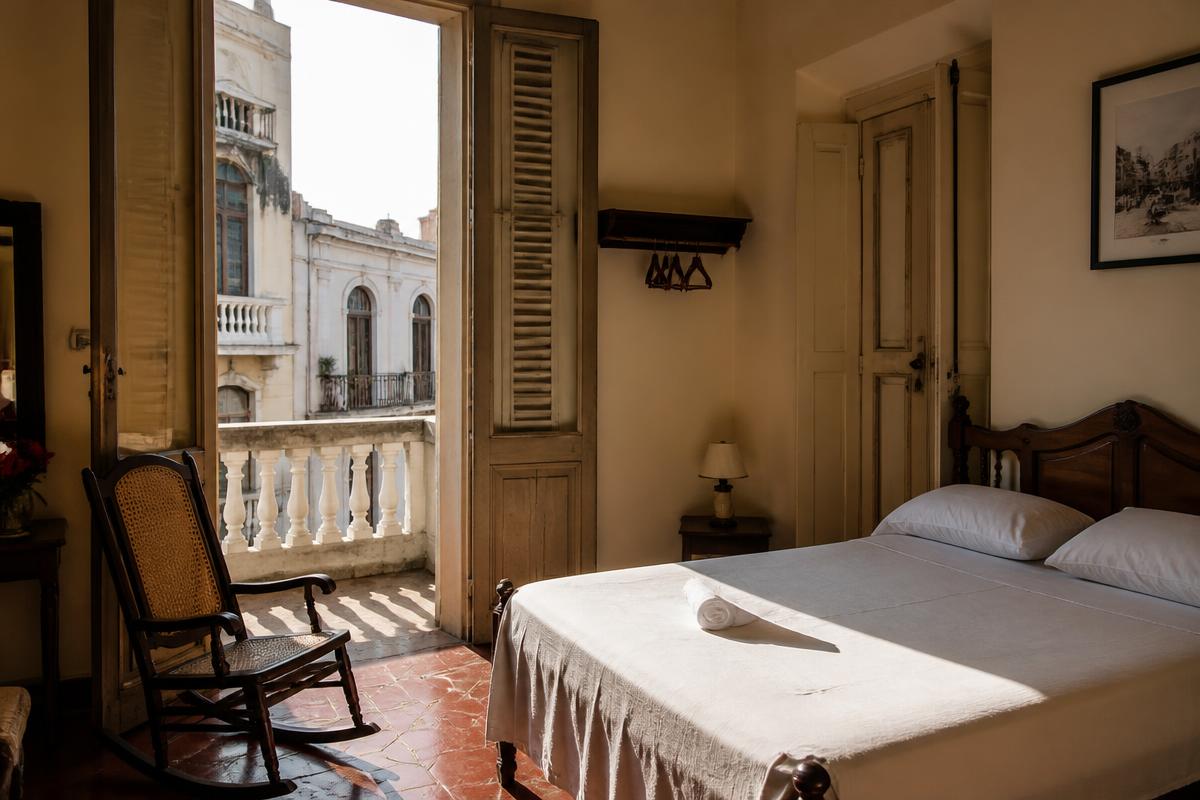
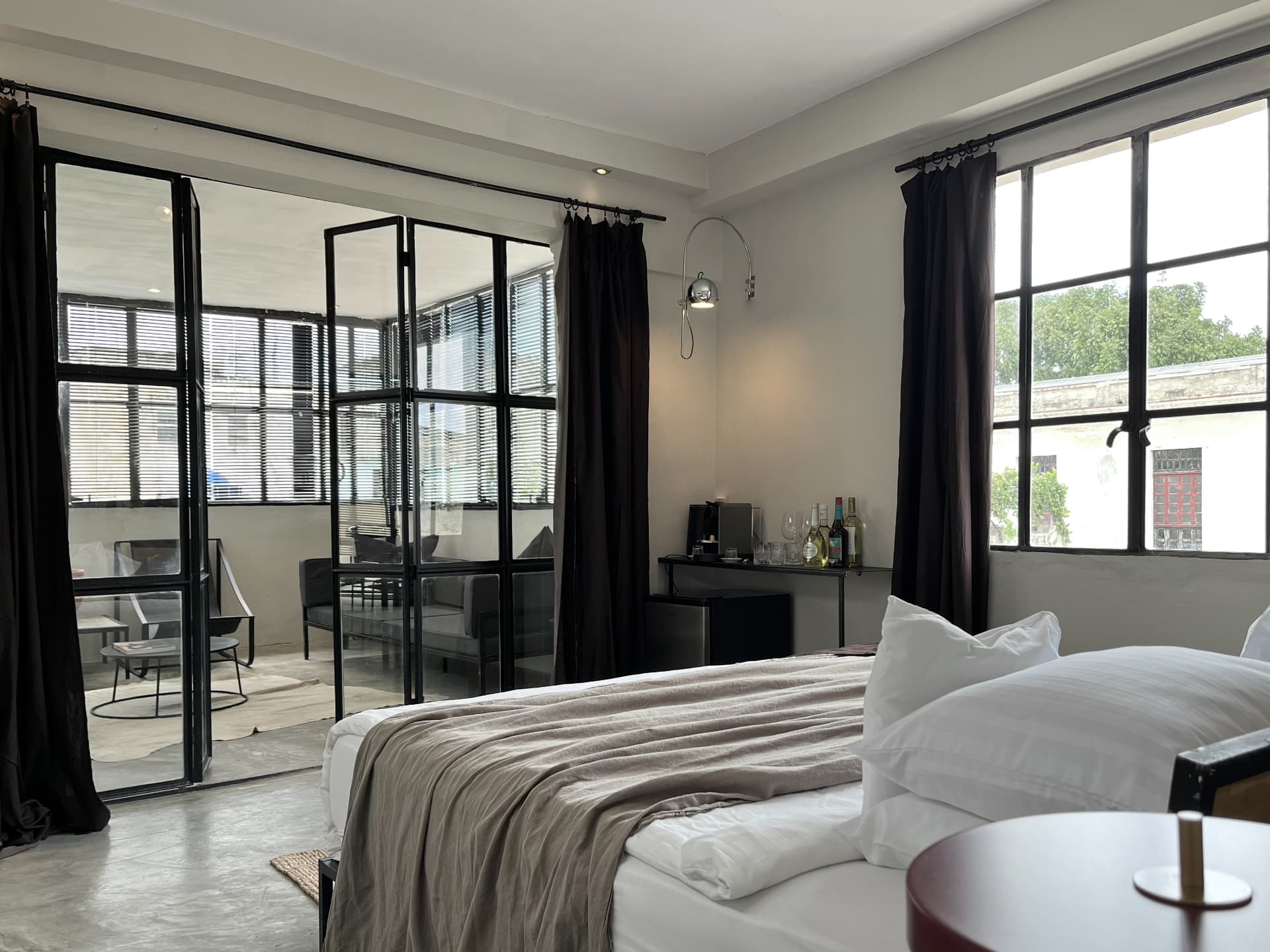
Almost every good stay in Cuba is a casa particular — a private home licensed to host guests. The category splits in two. In a hosted casa you rent a room inside a family's house, with the family living there. In a whole-home rental you take the entire apartment or house to yourself, with the owner nearby but not resident.
Both are privately owned, both are legal and licensed, and both put your money directly into a Cuban household. The choice is not about ethics or quality — it is about what kind of days you want.
What a hosted casa particular gives you
A licensed private home with a room of your own, hosted by a family that lives on site. Breakfast is typically available for a small extra charge, and hosts routinely arrange taxis, guides and onward rooms in the next town.
The real product is not the room, it is the household. A host who has lived on the same street for thirty years knows which paladar is good this month, which driver is reliable, what the queue at the exchange office looks like today. That information is not on the internet, and it is the difference between a smooth week and a frustrating one.
The trade-off is variability and privacy. Standards differ house to house, so recent reviews matter more than any rating badge, and you are a guest in someone's home: there are shared spaces, family rhythms and a front door that is not exclusively yours.
What a whole-home rental gives you
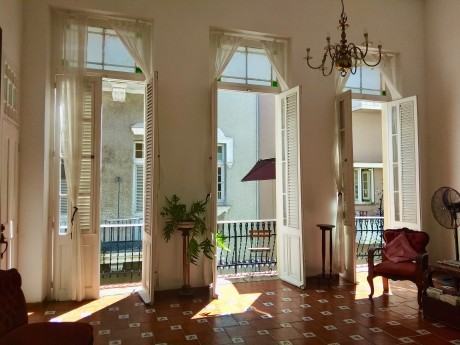
Privacy, a kitchen, and usually a rooftop terrace: a self-contained apartment or house with the owner a phone call away rather than down the hall. Restored colonial homes in Old Havana are genuinely special, and the per-person cost drops fast with a group.
It suits families with young children, groups of friends who want a place to sit up late, and anyone staying more than three or four nights in one city. Having somewhere to make coffee and do laundry stops a long trip from feeling like a series of hotel corridors.
The trade-off runs the other way: nobody is there to explain the neighborhood, cook you breakfast, or notice that you never came back. You also inherit the practicalities — knowing where the water tank switch is, and what to do when the power drops.
Cost, honestly compared
A hosted room is almost always the cheaper option for one or two people, and the price usually includes far more service than the number suggests — recommendations, arrangements, sometimes laundry. Breakfast is a small extra and is generally the best value meal of your day.
Whole homes cost more as a flat nightly rate but split across four to six people they often undercut separate rooms, and a kitchen removes a meal a day from your budget. Run the arithmetic per person per night rather than per property; the answer flips somewhere around three guests.
What each option means for your daily schedule
A hosted room quietly does some of the work of filling your days. Hosts know which family workshops are open this week, which private restaurants are actually serving, and which independent guide is reliable. For travelers who need a full schedule of meaningful engagement with Cubans, that local knowledge is worth more than the square footage of a whole home.
A whole home gives you a base and hands the scheduling back to you. That suits travelers who have already lined up their own contacts, workshops or classes, and who want somewhere quiet to return to at the end of a long day.
Both are private — and both must stay that way
Whichever shape you choose, the ownership question is identical: the property should be owned and run by private Cubans, and it should not appear on the US restricted list. That applies to a single room above a family kitchen and to a three-bedroom colonial house rented in its entirety.
Whole-home listings occasionally sit inside larger buildings under mixed management, so ask who holds the licence and who you are paying. A private operator will tell you plainly; keep the answer with your booking records.
Match the choice to the destination
In small towns — Viñales, Trinidad, the rural farm stays inland — a hosted casa is close to essential. Services are informal, there is no concierge desk anywhere, and the household is your entire logistics department.
In Havana, Cienfuegos or Santa Clara, where you can find your own way easily, a whole home starts to make more sense — particularly for the longer stretch of a trip when you want a base rather than a stop.
The practical answer: mix them
Many travelers take a hosted casa in smaller towns, where local knowledge is worth the most, and a whole home in Havana or another city, where they want space and a kitchen. It is the cheapest way to get both comfort and the local experience.
If you only take one rule from this article, make it this: put the hosted stays at the start of the trip. The knowledge you pick up in the first three days from a family who wants you to have a good time will improve every booking, meal and journey that follows.
Booking happens on our partner's site — we never take payments here.
Book Now